
You can make a useful first estimate from an appliance’s power rating, the hours it runs, and the electricity rate on your bill. The result is a planning figure, not a promise of the amount your utility will charge.
The biggest source of error is often run time. A heater may cycle on and off, a refrigerator doesn’t run its compressor continuously, and a device’s labeled wattage may not match its average use.
Treat your first calculation as a way to understand the scale, then refine it with better information.
Start with watts, hours, and your rate
Electricity consumption is commonly measured in kilowatt-hours, or kWh. One kilowatt is 1,000 watts, so a 1,000-watt device running at that power for one hour uses one kWh.
For a simple estimate, multiply watts by hours of operation, then divide by 1,000. Multiply the resulting kWh by the applicable price per kWh to estimate the usage charge.
A 500-watt device running at that power for two hours uses 1 kWh: 500 × 2 ÷ 1,000 = 1. At an illustrative rate of $0.20 per kWh, the energy portion would be $0.20.
That $0.20 rate is an example for arithmetic, not a current national or local rate. Your actual rate, run time, and bill structure determine what you pay.
Find the power rating
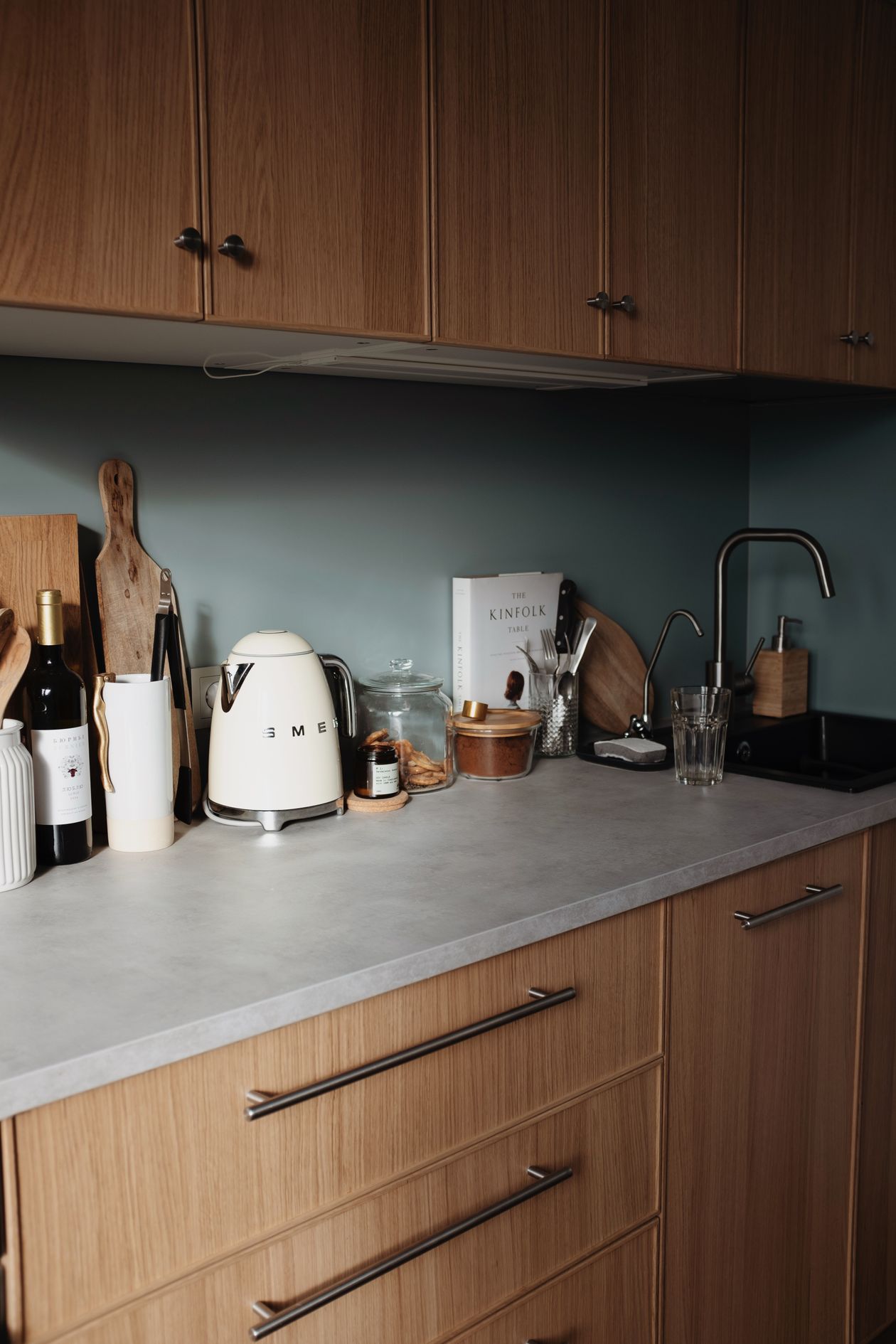
Look for watts on the device label, its power adapter, the user manual, or the manufacturer’s specifications. The label may show a maximum or rated input rather than the power the device uses throughout a normal day.
If you find more than one number, check what each describes. A device with several operating modes may draw different power on each setting, and a motor or heating element can cycle during use.
Avoid using an output rating as if it were electricity input. For example, a cooling or heating capacity describes a different thing from the electrical power consumed to operate the equipment.
If the rating is unavailable or the device varies substantially, a compatible plug-in electricity monitor can help measure energy use over time for an appropriate plug-in device. Follow the monitor’s instructions and rated limits; don’t use a plug-in monitor with hardwired equipment or a load it isn’t designed to handle.
Estimate actual operating time
Count hours at the stated power, not merely hours plugged in. A lamp may draw approximately its operating power while switched on, but a thermostat-controlled appliance may switch its main load on and off.
For a first estimate, record when you normally use the appliance over several days. Separate high and low settings if you know their power ratings, then calculate each period and add the results.
If you only know a maximum rating, a calculation that assumes continuous operation at that rating can illustrate a ceiling under those assumptions. It should not be presented as the appliance’s measured everyday consumption.
Seasonal equipment deserves extra care. A space heater used briefly on mild days and frequently during cold weather will not have the same monthly operating hours, even if its rated wattage never changes.
Convert the result to a month
Multiply the daily kWh estimate by the number of days you expect to use the appliance. For example, 1 kWh per day over 30 days equals 30 kWh for that period.
At the illustrative $0.20 per kWh rate, 30 kWh would add $6 in usage charges before any rate changes or other bill effects. If the device runs on half those days under the same assumptions, the example becomes 15 kWh and $3.
Use the dates on your own bill rather than assuming every billing period is exactly 30 days. For a seasonal estimate, calculate representative periods separately instead of multiplying a peak winter month by twelve.
Write down the assumptions beside the result: device rating, actual running hours, days used, and the rate applied. When one assumption changes, you can update the estimate without starting over.
Find the rate that applies to you
Your bill may show energy supply, delivery, taxes, fixed customer charges, and other items separately. Check your utility’s rate schedule or ask the utility which charges change when you use an additional kWh.
Dividing the full bill by total kWh gives a rough average for that bill. It may be useful for a broad comparison, but it can include fixed charges that do not rise with each extra kWh and may not represent the price of the next unit you use.
Some plans use tiers or time-of-use periods. In those cases, the rate for extra consumption can depend on how much you have already used or when the appliance runs; check the specific plan before assigning one rate to every hour.
The U.S. Energy Information Administration explains that electricity prices vary by locality and over time.
For context, EIA reports a preliminary 2025 U.S. residential average of 17.30 cents per kWh. That annual average is historical, not a quote for your address or your current billing period.
A national average is useful background, but it cannot replace your own utility’s current tariff.
Compare two ways of using the same device
Suppose a 1,200-watt appliance runs at that power for one hour each day. The calculation is 1,200 × 1 ÷ 1,000 = 1.2 kWh per day, or 36 kWh over 30 days.
At the same illustrative $0.20 rate, that is $7.20 in usage charges. Running it for 30 minutes per day under otherwise identical assumptions would use 18 kWh over 30 days, or $3.60 at that example rate.
The difference is $3.60 for the example period. It does not account for a device changing power, a different tariff, or other equipment that might run more or less as a result.
This comparison is often more useful than treating the result as an exact bill prediction. It shows which assumption—hours, watts, or rate—has the most influence on your estimate.
When a meter helps
A compatible energy monitor can record consumption over a longer interval, which is helpful when a plug-in appliance cycles. Measure during a typical period and note that weather, room temperature, settings, and household habits can still make another period different.
For large or hardwired appliances, consult the manufacturer’s information or a qualified electrician about appropriate measurement options. Don’t open an electrical panel or alter wiring to make a household estimate.
If a manufacturer supplies an annual energy estimate, compare its stated assumptions with your own use. An estimate based on standardized conditions can help compare models, but it isn’t a personalized bill forecast.
Keep your estimate useful
Label the result with the period it covers and the date you checked your rate. If your utility changes its tariff or you change how often you use the appliance, update the relevant input instead of treating the original estimate as a permanent price.
For a shared household, compare estimates using the same assumptions before making a decision. A range based on realistic low and high usage can be more informative than one precise-looking number built on an uncertain daily schedule.
Read a surprising result carefully
A large estimated amount can come from a real high-power load, an incorrect wattage, or an assumption that the appliance runs continuously. Recheck the unit, operating hours, and decimal point before replacing equipment or changing your routine.
A small appliance used around the clock can also accumulate meaningful energy over a long period. Conversely, a high-power device used for only a few minutes may contribute less than its wattage initially suggests.
If your whole bill changes unexpectedly, compare billing days, total kWh, rates, weather, and household use. A single appliance estimate is a clue, not proof of the cause.