
An asphalt roof replacement is more than the price of shingles. Your quote can also include removing the old roof, underlayment, flashing, labor, disposal, and repairs that become visible only after the old material comes off.
A national estimate can help you start a conversation, but it can’t price your particular roof. Use it to understand the scale of the project, then ask local contractors to price the same scope in writing.
Start with a published benchmark
HomeGuide’s roof replacement guide, dated November 7, 2025 and checked here on November 4, 2026, reports an average range of $5,700 to $16,000 for a new asphalt shingle roof. The site says its figures draw on research and project costs reported by its members.
That is HomeGuide’s reported range, not a quote from your contractor or a live price for your ZIP code. Roof area, slope, materials, access, local labor, and the work included can move an individual estimate outside it.
Before comparing any two published ranges, check their dates and definitions. One may cover installed asphalt shingles, while another may cover materials alone or a different roof system.
Distinguish roof area from house area
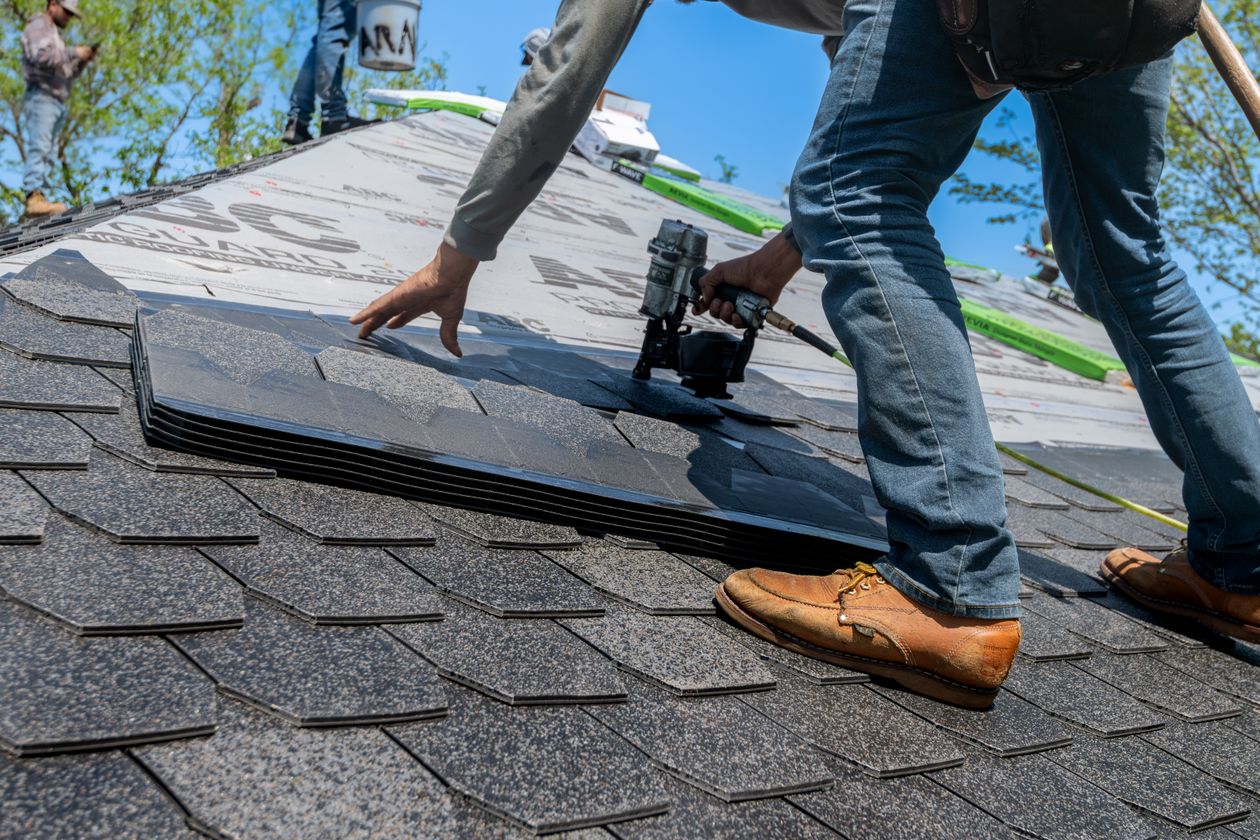
Roofers often measure roofing in squares. One roofing square equals 100 square feet of roof surface, so a measured 2,000-square-foot roof contains 20 squares before any allowance for cuts and waste.
That calculation describes roof surface, not necessarily the floor area of your home. Roof pitch, overhangs, multiple planes, and features such as dormers affect the amount of surface that needs covering.
Don’t climb onto the roof to measure it. Ask each contractor how the roof was measured and how much material the estimate allows for waste, then check that the proposals use comparable quantities.
If one proposal lists 20 squares and another lists 26 for the same house, ask why. Different methods, included structures, or waste allowances may explain the difference, but you need the assumptions before comparing their unit prices.
Separate the visible covering from the system
Shingles are the visible layer, but a roofing proposal may also include underlayment, starter and ridge materials, flashing, vents, fasteners, and edge details. The exact components depend on the roof and the chosen system.
Request the product and grade for the shingles as well as the other major materials. Ask whether the quote includes replacing flashing around penetrations and transitions or whether some existing material is expected to remain.
A price that omits an item is not automatically wrong. It is harder to compare, however, unless the contractor explains whether the item is unnecessary, included elsewhere, or excluded from the proposal.
Ask how removal and disposal are handled
Many replacement projects involve removing existing roofing before installing the new system. The estimate should state what will be removed, who handles the debris, and whether the cost includes disposal and protection of the surrounding property.
An overlay may be proposed in some circumstances. Whether it is appropriate depends on the existing roof, local requirements, manufacturer instructions, and the contractor’s assessment; don’t assume an overlay is allowed or suitable simply because its initial price is lower.
Ask what happens if the crew finds additional layers or materials that need special handling. A written unit price or change-order process can make an uncertain item easier to understand before work begins.
Plan for the roof deck’s unknown condition
A contractor may not be able to see all of the decking until the old roofing is removed. If a section is damaged, replacing it can add material and labor beyond an estimate that assumes a sound deck.
Ask whether the proposal includes any deck replacement and how additional work is measured. A useful agreement explains the charge basis, who will document the condition, and how you will approve extra work.
Keep a separate contingency in your own budget for potential changes. The amount you choose should reflect what is known about your home and your ability to absorb a surprise; it is not the same as an automatic fee owed to the contractor.
Understand the role of roof complexity
Two roofs with similar surface area can take different amounts of work. A straightforward roof and one with several roof planes, penetrations, steep sections, or difficult access may require different labor and protection.
Ask the contractor to explain which features matter in your estimate. A simple description such as “includes new flashing at two skylights” is more useful than an unexplained surcharge for a complex roof.
The pitch also affects the surface being measured and how the work must be performed. It is one reason to request an actual roof measurement rather than converting your home’s floor area into a purchase quantity on your own.
Compare estimates using the same scope
The Federal Trade Commission recommends getting multiple written estimates that identify the work, materials, completion date, and price. Ask for an explanation when estimates differ substantially.
Lay the proposals side by side and compare the shingle product, underlayment, flashing, ventilation work, tear-off, disposal, deck allowance, warranty, and payment schedule. Mark unclear items instead of assuming they are included.
For a simple arithmetic example, suppose Quote A is $11,000 but excludes $800 of identified disposal work, while Quote B is $11,500 with that work included. On those assumptions, A becomes $11,800 and B is $300 lower for the comparable items.
Those amounts are fictional and do not estimate the cost of your roof. Other differences in materials, hidden-damage terms, timing, and warranty may still matter more than that example difference.
Check permits, payments, and warranty terms
Ask who will determine whether a permit is required, obtain it, and pay the fee. Requirements vary by location, and the proposal should make responsibility clear rather than leaving each party to assume the other will handle it.
Review the payment schedule and any financing separately from the project price. The FTC advises against paying the full amount up front and recommends checking the agreement carefully before signing.
Ask for the material and workmanship warranty terms in writing. Check what each covers, how long it applies, any maintenance obligations, and whom you should contact if a problem appears after installation.
Check the scope around your home
Roof work can affect driveways, gardens, patios, and access to the house. Ask where materials and a disposal container will be placed, how the crew will protect nearby areas, and who will handle cleanup after the project.
If you have a detached garage or another roofed structure, confirm whether it is included in the measured area and price. A line item that names the structure helps you avoid comparing one proposal for the house alone with another for the entire property.
Use the range as a starting point, not a bid
A useful working budget has three parts: the agreed base scope, identified items that are not included, and your own reserve for uncertain conditions. Keep the numbers separate so that a contractor’s fixed price is not confused with your personal contingency.
Before signing, confirm the measured area, materials, tear-off and disposal, deck-repair process, permit responsibilities, and final payment conditions. If any estimate is unclear, ask for a written revision.
The right number for your home comes from a clearly defined project and a current local quote. A broad published average can orient you, but it cannot inspect your roof or replace a detailed agreement.
Sources
- HomeGuide: How Much Does a Roof Replacement Cost?, dated November 7, 2025; accessed November 4, 2026.
- Federal Trade Commission: How To Avoid a Home Improvement Scam