
A flooring quote may start with a price per square foot, but your final bill can include much more than the floor you walk on. Removing the old surface, preparing the subfloor, moving furniture, and finishing edges can all change the scope.
Before you compare numbers, ask each installer to measure the same rooms and identify what the price includes. A useful budget separates known charges from work that can’t be confirmed until the existing floor is opened.
Start with a dated benchmark
In a guide published February 5, 2026, HomeGuide reported an average installed flooring range of $4 to $15 per square foot, with material and labor included. For 500 square feet, its example range was $2,000 to $7,500.
That wide range covers different flooring types and conditions. It is historical context from HomeGuide’s research and reported project costs, not a current quote for your home or a promise that every material falls within it.
For your own planning example, 400 square feet at an assumed installed price of $8 per square foot gives a $3,200 base. Ask whether that unit price already includes trim, removal, preparation, and other items before adding or comparing anything.
Make sure the measurement covers the same space
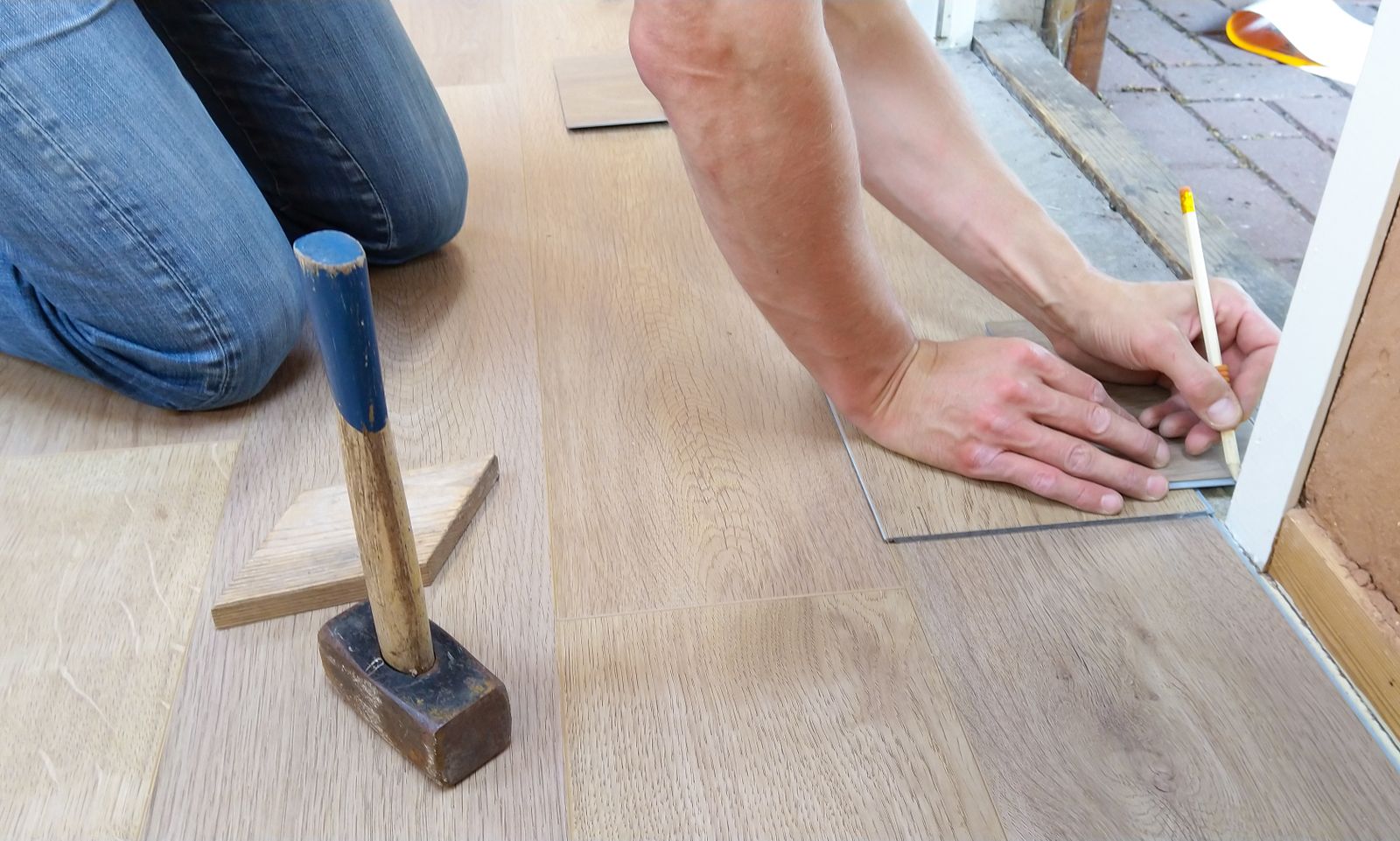
Have the installer identify the rooms and floor area in the estimate. Hallways, closets, stairs, and adjoining spaces can be easy to overlook when you’re comparing a quick phone quote with an in-home measurement.
The amount of flooring purchased can exceed the area covered because pieces must be cut to fit. Ask the installer to state the measured area, the quantity being ordered, and the reason for the difference rather than applying a guessed waste percentage to every product.
If you plan to buy the material yourself, confirm who calculates the order and what happens if extra boxes are needed. Also ask whether unused, unopened material can be returned under the seller’s actual policy.
Compare materials and installation as a package
A material-only price is not the same as an installed price. A proposal should identify the specific product and what the installer charges for labor, underlayment, transitions, and any other materials needed for the quoted job.
Flooring products differ in how they are installed and what the manufacturer requires underneath them. Ask whether the installer has accounted for the condition of your space and whether any existing layer can remain.
If you are deciding between two materials, compare the complete scopes rather than multiplying their shelf prices alone. One product’s lower material price can be offset by different preparation or finishing work.
Ask what happens to the old floor
Removal is not always included. Check whether the crew will take up the existing flooring, underlayment, trim, and fasteners, and whether disposal fees are part of the quote.
If a contractor proposes installing over the current surface, ask why that approach is suitable for your floor and the new product. The answer can depend on the condition and construction of the layers already present.
Older flooring or adhesives can require special precautions. If you suspect asbestos-containing material, do not sand, scrape, or disturb it yourself; consult the EPA’s guidance on asbestos in the home and seek appropriate local advice before work proceeds.
Allow for subfloor preparation
The subfloor is the surface below the finished flooring. An installer may need to address uneven areas, loose sections, moisture, or damage before the new material can be installed as specified.
Some conditions are visible during an estimate; others may be hidden until the old flooring is removed. Ask the installer what preparation is included, what is excluded, and how additional work will be priced and approved.
An allowance is useful only when you know what it covers. For example, a quote might include a stated amount for preparation, while another lists a separate unit price if repairs are required. Ask how unused allowance funds or costs above the allowance will be handled.
Check the details around edges and transitions
The visible finish includes more than the middle of the room. Ask whether the estimate includes transitions between rooms, baseboards or shoe molding, door clearances, and the work required around fixed cabinets or fixtures.
If existing trim will be removed and reinstalled, ask who is responsible for damage, caulking, and paint touch-ups. If new trim is proposed, confirm the material and finish so you aren’t surprised by a separate painting bill.
Stairs and unusual layouts may be priced differently from open floor area. Have the contractor list them separately when applicable so you can see which work each proposal covers.
Compare furniture, appliances, and cleanup
Some installers expect an empty room; others offer to move furniture or appliances for an extra charge. Ask what you need to do before the crew arrives and whether disconnecting or reconnecting equipment requires another professional.
If the project covers a kitchen or bathroom, clarify how access and scheduling will work. You may need to coordinate flooring with other trades or plan for part of the space to be unavailable.
The estimate should also explain debris removal and the condition in which the installer will leave the area. Confirm whether protective coverings and ordinary cleanup are included.
Put estimates on a comparable basis
Imagine quote A is $3,200 for flooring and installation but excludes $300 of removal. Quote B is $3,450 and includes removal for the same space and materials. Adding the stated removal charge makes A’s illustrative comparison $3,500 versus $3,450.
That does not settle the decision if preparation, trim, product quantities, or warranty terms differ. The example simply shows why the lowest base price isn’t necessarily the lowest price for the same work.
List each quote’s area, product, underlayment, removal, preparation, transitions, furniture handling, and disposal. Mark missing details as questions rather than assuming they are included.
Plan for changes before the work starts
Ask how the contractor will notify you if a hidden condition changes the scope. A clear change order should describe the additional work and its price before you approve it.
Keep a separate contingency in your own budget if the existing floor’s condition is uncertain. It is a planning reserve, not a charge the contractor is automatically entitled to collect.
The FTC recommends checking references and getting project details in writing. Review payment terms, the expected schedule, and warranty documents before signing, and keep copies of any approved changes.
Questions to ask an installer
Ask who is providing the materials, how they will be measured, and whether the installation follows the product manufacturer’s requirements. Find out what happens if the product is delayed or the quantity ordered is short.
Also ask what conditions must be checked before installation, how long the space will be unavailable, and what care instructions or paperwork you’ll receive afterward. The answers help you plan the project as a whole, not just the floor covering.
Your local estimate will depend on the product, area, condition of the existing floor, and the work included. Use a dated published range to frame questions, then rely on a written proposal for your specific home.
If you are coordinating the floor with painting or another renovation, ask each contractor about the order of work and protection of finished surfaces. Confirm who moves equipment and who is responsible for touch-ups so those tasks don’t fall between two estimates.
Sources
- HomeGuide: Flooring installation cost, published February 5, 2026. Historical installed ranges and scope.
- EPA: Learn about asbestos. Where asbestos may be found in flooring materials.
- FTC: How to avoid a home improvement scam. Written estimates and contractor checks.