
A gutter estimate can begin with a price per linear foot, but the total depends on more than the length of the roof edge. Downspouts, removal, access, and repairs behind the old gutters can change what you pay.
Before you choose an installer, ask each company to describe the same sections of the house and explain what is included. A clear scope makes a published price range more useful and helps you prepare for work that can’t be confirmed until the old system is removed.
Use a dated range as context
In an article published October 28, 2025, HomeGuide reported an installed range of $12 to $25 per linear foot and an average total of $2,200 to $5,000 for a home. The figures include labor and materials in that source’s description, but they are historical benchmarks rather than a current quote for your address.
Your house may have a different length, height, layout, or material choice from the projects behind the reported range. Confirm the specific measurement and scope with an installer before using it as a budget.
For an illustration, 150 linear feet at an assumed $18 per foot comes to $2,700. That calculation is only a base example: you still need to check whether the quote includes downspouts, removal, repairs, and any other necessary work.
Confirm where the gutters will go
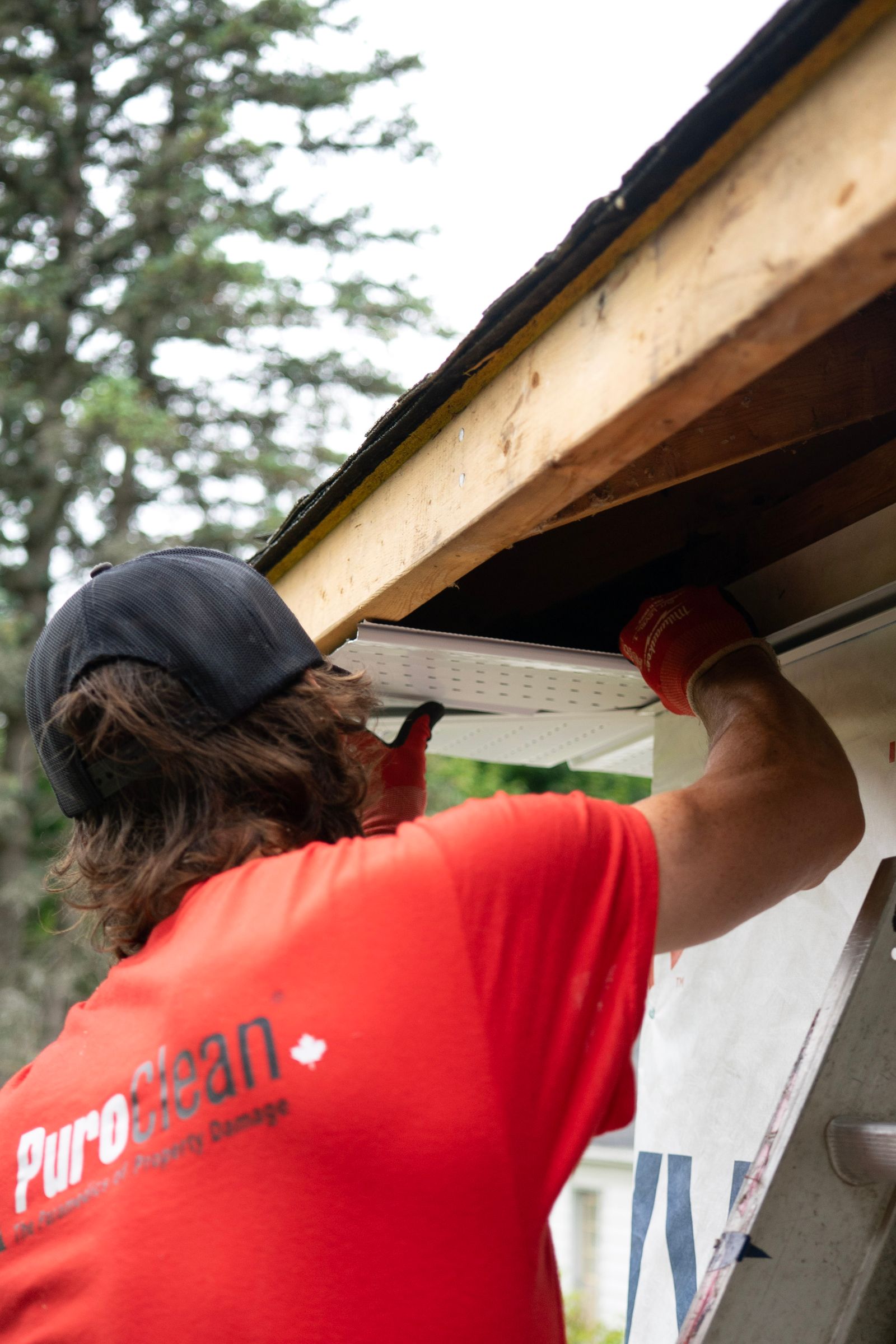
Ask the installer to identify each roof edge included in the measurement. A garage, porch, addition, or detached structure may be part of one proposal and absent from another.
Have the company distinguish the length of gutter from the number and location of downspouts. A sketch or annotated photo can make it easier to see whether two estimates cover the same work.
Don’t estimate gutter length from the home’s floor area alone. The roofline and the sections being served determine the relevant measurement, so ask how the contractor measured them.
Compare the actual system and material
A quote should name the gutter material, size, profile, and installation method, along with the proposed downspouts and fittings. It should also explain any difference between the current layout and the one being proposed.
Materials have different prices and maintenance characteristics. Instead of comparing only the price per foot, ask what material is included, what finish is specified, and whether corners, end caps, hangers, and outlets are part of the quoted system.
If a contractor suggests changing gutter or downspout size, ask how that recommendation relates to your roof and local conditions. An online average cannot determine the right drainage design for your house.
Check removal and disposal
When replacing an existing system, find out whether taking it down and hauling it away are included. A new-installation quote and a replacement quote can have different scopes even when the stated length matches.
Ask how the crew will protect landscaping and other nearby surfaces during removal. If the estimate excludes disposal or access equipment, request a separate price so you can compare the full work.
If you want to keep any existing components, make that clear before signing. The contractor should identify whether reusing them is practical and how it affects the scope or warranty.
Ask about fascia and concealed damage
The fascia is the board along the roof edge to which gutters are often attached. Once old gutters come down, the crew may find deterioration that wasn’t fully visible during the estimate.
Ask whether the base quote includes any fascia or related repairs and how additional work will be priced. A unit rate or allowance can help you plan, but it is not proof that a specific amount of damage exists.
Agree on a change-order process before work begins. Ask the contractor to document an unexpected condition, explain the proposed repair and price, and get your approval before proceeding.
Look beyond the gutter itself
A functional system needs a plan for where collected water will go. Ask where downspouts will discharge and whether extensions, connections, or changes to the existing drainage arrangement are included.
If the proposal includes gutter guards, have them listed separately with the product and price. Ask what maintenance the system will still need and whether the guard affects access for cleaning or the written warranty.
A gutter project does not automatically repair a roof leak or solve every water issue around a foundation. If an installer identifies a separate concern, ask who should assess it and whether it needs its own estimate.
Consider access and working conditions
A higher roofline, limited access, obstacles, or a complicated layout can change the labor and equipment required. Ask whether the installer has visited or otherwise assessed the property before relying on a fixed price.
Find out whether vehicles, gates, outdoor furniture, or pets need special arrangements on the workday. Confirm who is responsible for protecting plants and cleaning up fasteners and debris afterward.
If a quote assumes straightforward access, ask what could make the price change. A vague allowance for “extra work” is less useful than a written description of the condition and how it will be priced.
Compare like-for-like totals
Suppose quote A is $2,700 for the new gutters but excludes $250 of removal. Quote B is $3,000 and includes removal for the same system and roof edges. The illustrative comparable totals are $2,950 and $3,000 before any other differences.
Now check the downspouts, hangers, disposal, access, and repair terms. If one quote includes work the other doesn’t, ask for a separate price rather than treating the lower base number as the final answer.
Write down the measured length, material, included components, removal, repairs, cleanup, and warranty for each proposal. Mark an unmentioned item as unknown until the contractor confirms it in writing.
Decide how the work will be finished
Ask whether the installer will test or otherwise check the system after installation and explain what you should watch for. The proposal should make clear who handles any adjustment if an outlet or connection doesn’t perform as intended.
You can review accessible details from the ground and discuss concerns with the installer without climbing a ladder. Keep any photos or measurements provided with your estimate and final invoice so you can refer to the agreed layout later.
If the work is part of a larger roof or exterior project, clarify the order of the trades and who coordinates the edges and existing components. Separate quotes may leave a gap unless both contractors explain their responsibilities.
Read the contract and warranty
The FTC recommends checking references and getting the scope, payment schedule, and other important terms in writing. Confirm any local licensing or permit requirements that apply to your project.
Ask for the actual workmanship and product warranty documents, including exclusions and whom to contact if there is a problem. A broad promise that the work is “guaranteed” doesn’t explain the remedy or the conditions of coverage.
Keep the signed agreement, approved changes, and final invoice together. Ask how the installer will review the completed work with you and address an issue you notice afterward.
Build a practical budget
Use the written estimate for the work you have agreed to, then keep a separate reserve for genuinely uncertain conditions. A reserve is your planning decision; it is not an automatic charge or a substitute for approving a change.
Ask how long the quote is valid and when the work can be scheduled. Material prices and local labor conditions can change, so an older national range is a starting point for questions rather than a price guarantee.
With a clear scope and a plan for unexpected repairs, you can compare the proposals on their actual work and choose the one that fits your home and budget.
Sources
- HomeGuide: Gutter installation cost, published October 28, 2025. Historical installed cost ranges and cost factors.
- FTC: How to avoid a home improvement scam. Estimates, contractor checks, and written contracts.